


Medically reviewed by: Dr. Divya J G, MBBS, MS (OBG), DNB, FMAS, FRM, Consultant Obstetrician and Gynaecologist Last reviewed: 15 October 2026
Many women with PCOS (polycystic ovary syndrome, also called PCOD) worry about PCOD and pregnancy, and whether they will be able to conceive. The reassuring answer is that many women with PCOS do get pregnant, some without any treatment and others with help. The main difficulty is that ovulation can be irregular, so it may take longer and the timing is harder to predict. This guide to PCOS and pregnancy explains why, what treatment is available, how pregnancy is looked after and when to see a doctor.
In short: PCOS and pregnancy can go together. PCOS makes ovulation irregular, not impossible. Healthy habits, ovulation-inducing medicines and monitoring help many women conceive, and more advanced treatment such as IUI or IVF is available if needed. Pregnancy in PCOS needs a little extra attention, mainly to blood sugar and blood pressure.
PCOS and Infertility: How PCOS Affects Fertility
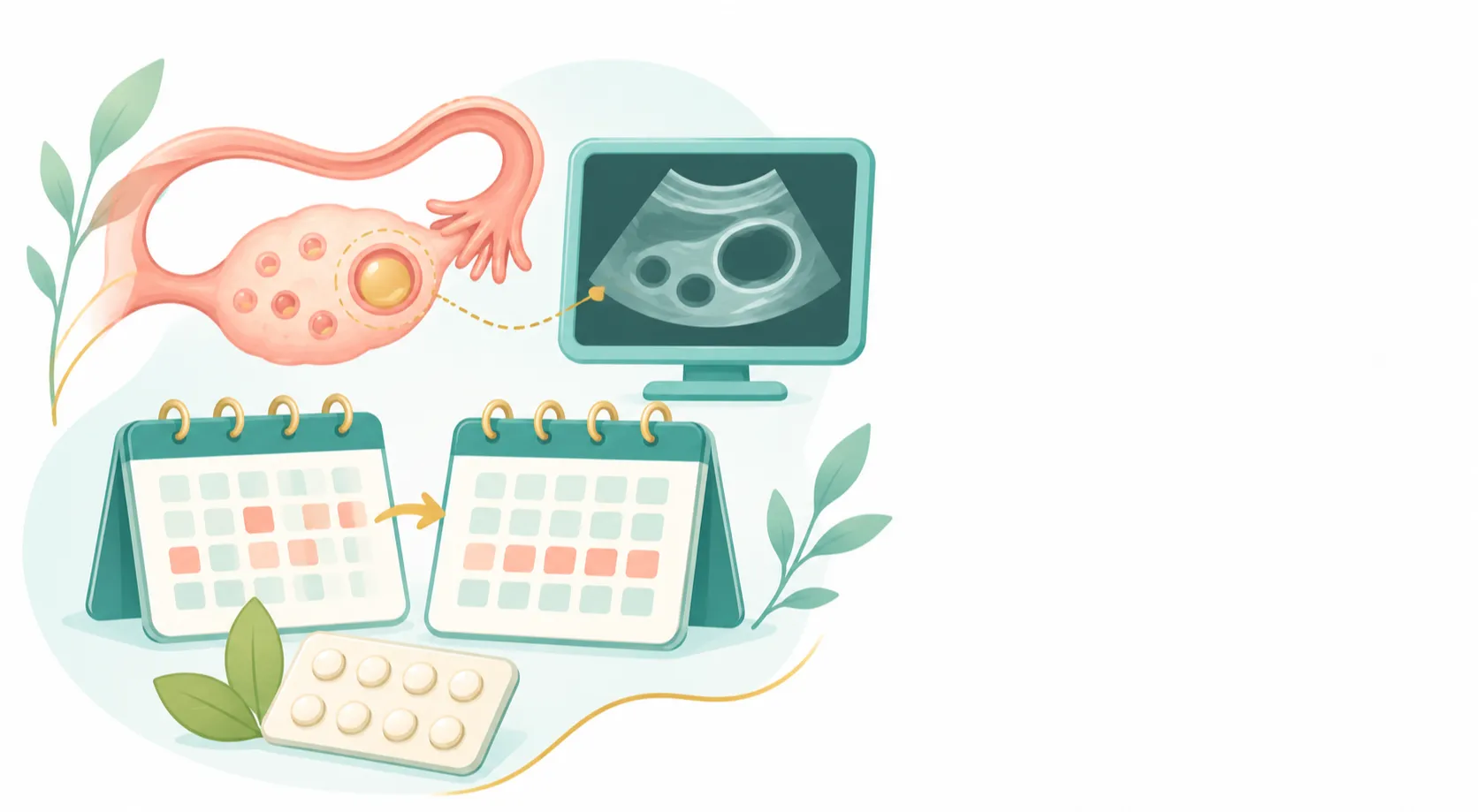
In PCOS, hormones such as insulin and androgens interfere with the monthly development of an egg. Follicles start to grow but may not mature or release an egg, so ovulation happens rarely or not at all in some cycles. That is why periods are irregular, and why a regular period does not always confirm ovulation. If you would like a reminder of what PCOS is and how it is diagnosed, read our guide to PCOD vs PCOS.
PCOS is only one possible cause of delay. Doctors also check the fallopian tubes, the uterus, thyroid and prolactin, and the male partner’s semen analysis, because a second factor can be present.
Can You Get Pregnant Naturally With PCOS?
Yes, many women do. Ovulation may happen in some cycles, especially when weight, sleep and stress are managed. Because it is unpredictable, timing intercourse by the calendar is unreliable, and tracking ovulation helps. Methods include watching for signs such as stretchy mucus, using ovulation kits (which can be misleading in PCOS because LH is often high) or having scans. A follicular study shows whether a follicle is growing and releasing an egg.
Before You Try: A Preconception Check
A visit before pregnancy lets your doctor:
- Confirm the diagnosis and rule out other causes of irregular periods
- Check blood sugar, thyroid and blood pressure
- Review your medicines, because some (for example some acne or hair-growth medicines) should not be taken in pregnancy
- Advise folic acid, usually 400 micrograms a day from at least a month before conception, with a higher dose for some women, which your doctor will decide
- Discuss vaccines, weight and lifestyle
Lifestyle Steps That Help Ovulation
- Weight. In women who are overweight, losing even 5 to 10 percent of body weight can restore more regular ovulation in some women and improve metabolic health.
- Activity. Aim for around 150 minutes of moderate exercise a week, such as brisk walking, cycling or swimming.
- Food. A balanced diet with whole grains, pulses, vegetables, fruit and enough protein, less sugary food and drink and regular meal times. Please avoid extreme or crash diets.
- Sleep and stress. Poor sleep and high stress can worsen symptoms.
- Tobacco and alcohol. Stop smoking and limit alcohol.
Treatment Options When Ovulation Needs Help
Treatment is chosen according to your age, how long you have been trying and your test results. A common order is:
- Ovulation-inducing medicines. International guidelines recommend letrozole for ovulation induction as the first-line medicine for women with PCOS who are not ovulating and have no other fertility factor. Clomiphene is an alternative. Your doctor decides the medicine and dose. Metformin may be added in selected women with insulin resistance, but it is not a stand-alone fertility cure. See our ovulation induction page.
- Monitoring with scans. During treatment, scans track how many follicles are growing. This lowers the chance of twins or higher multiple pregnancies and of ovarian over-response.
- Injectable hormones (gonadotropins). These are used when tablets do not work, with closer monitoring.
- Laparoscopic ovarian drilling. In selected women who do not respond to medicines, a small keyhole procedure can restore ovulation. It is an option for the doctor to discuss with you, with its own risks.
- IUI. Washed sperm are placed in the uterus around ovulation. See our page on IUI treatment.
- IVF or ICSI. Used when other treatments have not worked or there is another factor, such as blocked tubes or male-factor infertility. Women with PCOS are more prone to ovarian over-stimulation, so the protocol is chosen carefully to lower that risk.
Treatment usually continues for a limited number of ovulatory cycles, often around three to six, before the plan is reviewed. This is why an early consultation helps.
PCOS and Pregnancy: What to Expect Once You Conceive
Most pregnancies in women with PCOS go well. Some complications are more common, so care is a little closer. They include:
- Gestational diabetes. A glucose test is usually offered early in pregnancy and again at 24 to 28 weeks.
- High blood pressure and pre-eclampsia. Your blood pressure is checked at every visit.
- Miscarriage. The risk appears higher in some studies, partly because of weight and age. Metformin has not been shown to prevent miscarriage.
- Preterm birth and a larger baby, which are watched with growth scans.
These risks differ for each woman and depend on weight, age and sugar levels. Having PCOS does not mean you will have a complication. Having a healthy weight before pregnancy, taking medicines as advised and attending every antenatal visit lowers the risks. A normal delivery is possible, and the mode of delivery is decided by obstetric reasons, as in any pregnancy. See our pages on high-risk pregnancy care and managing diabetes and blood pressure in pregnancy.
After the Baby Arrives
PCOS does not go away after pregnancy. Breastfeeding, healthy habits and regular check-ups of blood sugar and cholesterol over the years remain important. If you plan another pregnancy, early advice helps.
Myths and Facts
- “With PCOS you cannot conceive.” Many women do, naturally or with treatment.
- “PCOD does not affect pregnancy.” It can delay ovulation and needs a check-up before and during pregnancy.
- “A C-section is compulsory with PCOS.” It is not. The delivery plan depends on how the pregnancy goes.
- “Pregnancy cures PCOS.” It does not.
- “A special diet or supplement alone fixes ovulation.” Healthy habits help, but no supplement replaces medical assessment.
When to See a Gynecologist
- You have PCOS or irregular periods and want to conceive soon
- You have been trying for 12 months (6 months if you are 35 or older), or sooner with very irregular periods
- You have not had a period for three months
- You have had a miscarriage or are over 35
- You are on treatment for PCOS and are planning a pregnancy
For help with PCOS treatment more generally, see our PCOS and PCOD treatment page.
PCOS and Fertility Care in Bangalore: Dr. Divya JG’s Clinic in BTM Layout
Dr. Divya JG consults at Genesiss Multi-Speciality Hospital in BTM 2nd Stage, near Jayadeva Metro Station, which is reachable from Jayanagar, JP Nagar, Koramangala, HSR Layout and Bannerghatta Road. A consultation on PCOS and pregnancy can cover your cycle history, tests, ovulation monitoring and a plan that fits your age and timeline. You can book an appointment to discuss your situation.
Frequently Asked Questions
Can I get pregnant with PCOS?
Yes. Many women with PCOS conceive, some naturally and some with ovulation-inducing medicines or other fertility treatment. Because ovulation can be irregular, it may take longer.
What is the first-line treatment for PCOS-related infertility?
International guidelines recommend letrozole as the first-line ovulation-inducing medicine for women with PCOS who are not ovulating and have no other fertility factor. Your doctor will choose the medicine and the dose for you.
How long should I try before seeing a doctor with PCOS?
If your periods are irregular, it is sensible to see a doctor before you start trying or soon after, instead of waiting for 12 months. If your periods are regular, the usual advice is 12 months, or 6 months if you are 35 or older.
Is pregnancy with PCOS high risk?
Some risks, such as gestational diabetes and high blood pressure, are more common, so care is closer. Many women with PCOS have healthy pregnancies, and good preparation and regular antenatal care lower the risks.
Do I need an IVF if I have PCOS?
Not necessarily. Many women conceive with lifestyle changes and ovulation-inducing medicines. IVF is considered when other treatments have not worked or another fertility factor is present.
Is letrozole for pregnancy safe to take?
Letrozole is taken for a few days early in the cycle to help an egg mature and release, and it is stopped well before conception. It should be taken only as prescribed and with monitoring, so that the response can be checked.
Can I take metformin to get pregnant?
Metformin is used in selected women with insulin resistance, but it is not a stand-alone fertility treatment, and it has not been shown to prevent miscarriage. Take it only as prescribed by your doctor.
Visit Dr. Divya JG’s Clinic in BTM Layout, Bengaluru
Genesiss Multi-Speciality Hospital, 17, 100 Feet Ring Road, near Jayadeva Metro, BHBCS Layout, BTM 2nd Stage, BTM Layout, Bengaluru, Karnataka 560076.
Phone: 9886777595 | Email: contact@drdivyagynecologist.com
Book an appointment | About the doctor
This article is for general health information. It is not a substitute for examination, diagnosis or treatment by a qualified doctor. If you think you may have an emergency, go to the nearest emergency department or call your local emergency number.
Dr. Divya J G Dr. Divya J G is an exceptional and highly skilled Obstetrician & Gynaecologist, recognised for her expertise in maternity care, pregnancy scans, and advanced gynaecological and laparoscopic surgeries. She completed her MBBS at Mysore Medical College and Research Institute (MMCRI) and earned her MS in Obstetrics and Gynaecology from Bangalore Medical College. With over 13 years of clinical experience, Dr. Divya J G is known for her meticulous attention to detail and patient-centred approach. She carefully understands each woman’s unique health needs and delivers personalised, evidence-based care to ensure safe pregnancies, effective treatments, and optimal outcomes.
Dr. Divya J G has extensive experience in managing a wide range of obstetric and gynaecological cases, including comprehensive maternity care, gynaecological surgeries, infertility evaluation, and IVF-related treatments. Beyond her clinical expertise, she is known for building strong trust and confidence among her patients through compassionate, patient-centred care and clear communication. From fertility counselling and conception planning to pregnancy, delivery, and post-treatment recovery, Dr. Divya J G ensures that every woman feels well-informed, supported, and at ease throughout her medical journey. Her commitment to ethical practice and evidence-based treatment consistently contributes to positive patient experiences and successful outcomes.